
HOH-KF-Smart vs. HOH-KF-1200: Robotic Arm or Chute Dispensing?
HOH-KF-Smart vs. HOH-KF-1200: Choosing Between Robotic Arm and Chute Dispensing

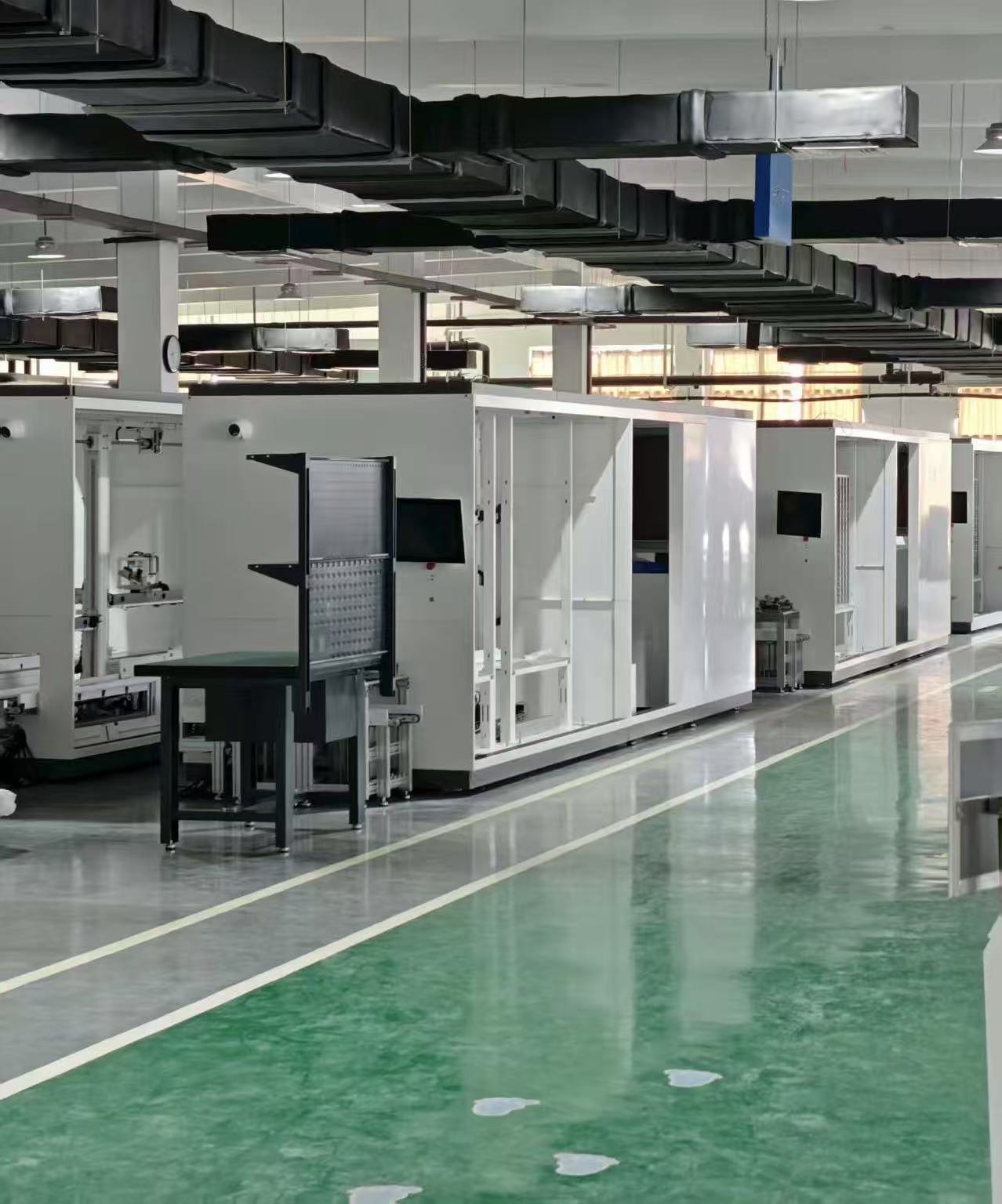
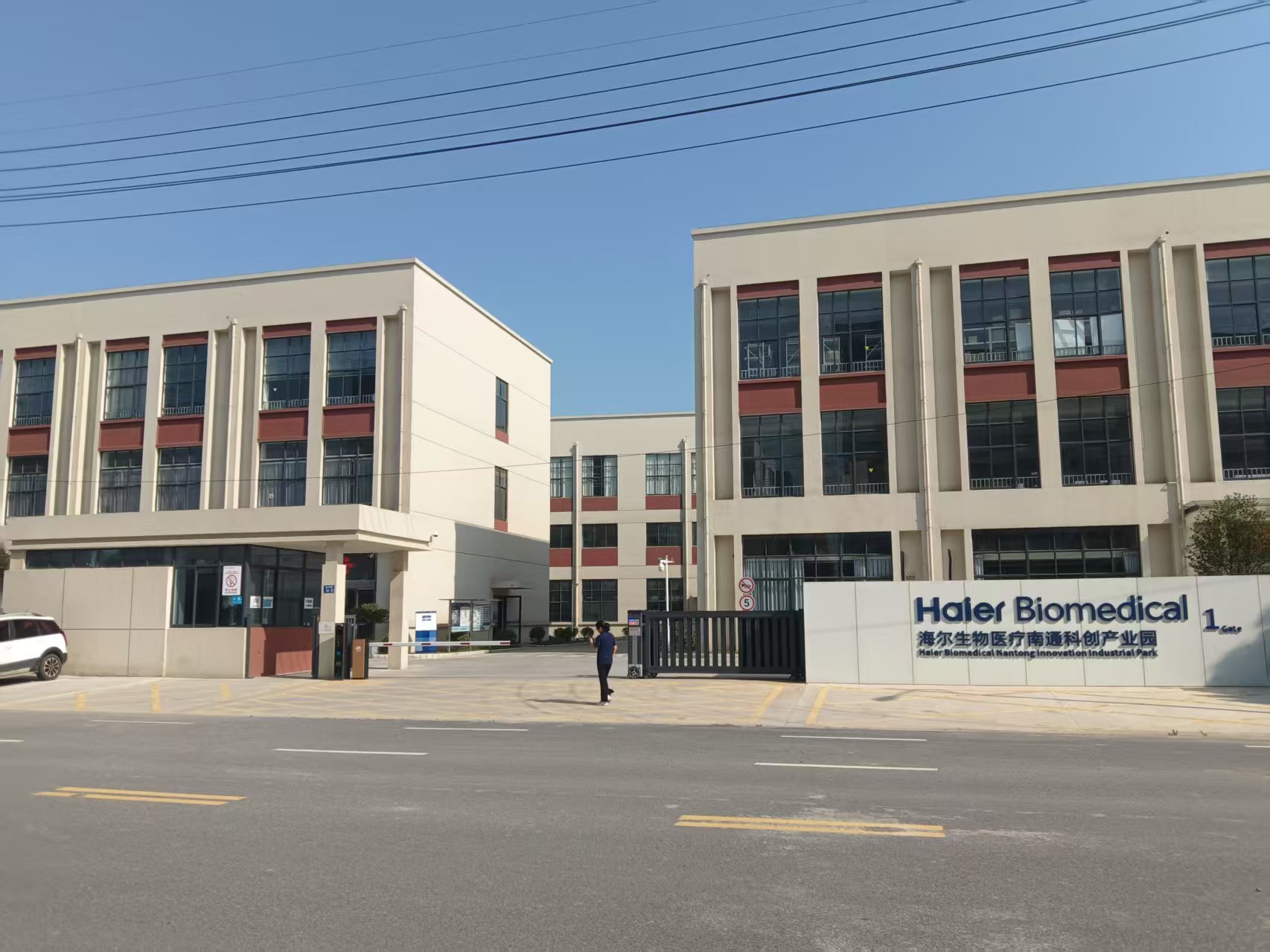
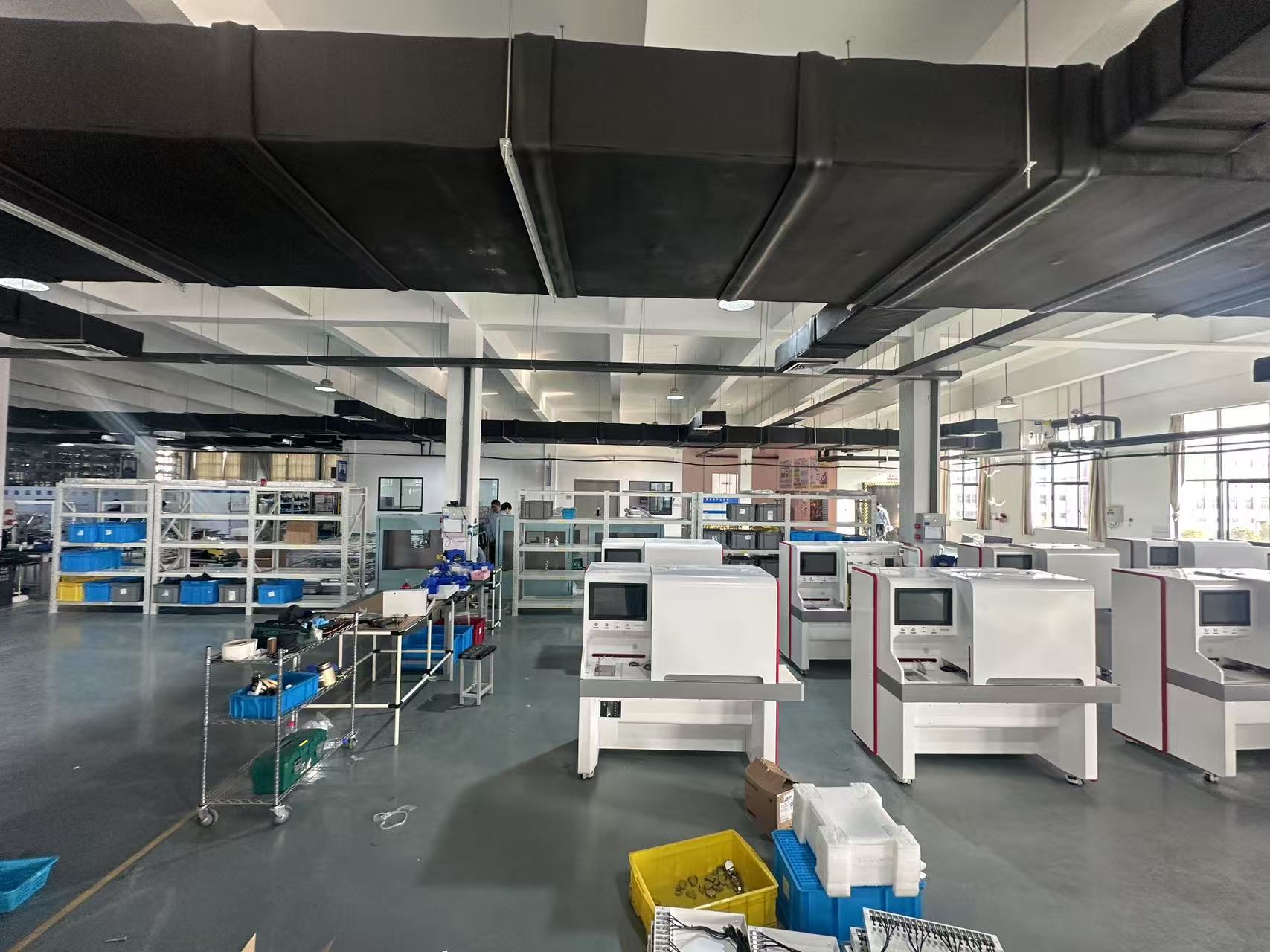
Two hospital pharmacies can run similar prescription volumes and still need different dispensing hardware. The HOH-KF-Smart robotic arm dispenser and the HOH-KF-1200 chute type dispenser are both built by Haier Biomedical Technology(Suzhou)Co., Ltd — a Suzhou-based healthcare technology company under Haier Group, founded in 2015, operating from a 13,000 m² production site with approximately 500 employees and a 100-engineer R&D team. Both models handle boxed medications in outpatient and inpatient pharmacy workflows. The difference lies in how a box reaches the dispensing point, and that difference determines throughput, footprint, replenishment workload and how the system can be expanded later.
This head-to-head comparison is written for pharmacy directors, hospital procurement teams and biomedical engineering departments working at the decision and execution stage — when the specifications are already on the table and the remaining question is which architecture to standardize on. Every product specification below comes from the manufacturer's published product data. Every third-party market figure is attributed to its source.
Short answer: Choose the HOH-KF-Smart robotic arm dispenser when formulary breadth, storage depth and expiry-controlled traceability dominate. It is specified for ≥1,500 medication types, ≥20,000 boxes of storage, FIFO/FEFO expiry management and barcode-based full-chain traceability.
Choose the HOH-KF-1200 chute type dispenser when prescription throughput and floor space dominate. It is specified at >350–500 prescriptions per hour, >2,400 boxes per hour of replenishment, parallel multi-prescription operation, and a space requirement under 12.85 m².
The Problem: Why This Decision Outlives the Installation
Most pharmacy automation projects frame the dispensing equipment decision as a capacity question: how many prescriptions per hour, how many boxes of storage. That framing understates the risk. The dispensing principle decides the daily work that never appears in a tender document — how staff replenish stock, how they clear an error, where the queue forms at 9 a.m., and how much floor space is permanently unavailable for anything else.
A robotic arm dispenser and a chute type dispenser solve the same task in structurally different ways:
- Robotic arm dispensing (HOH-KF-Smart): the robotic arm performs automated picking and placement based on system instructions, moving medication boxes between configured storage locations and dispensing points.
- Chute type dispensing (HOH-KF-1200): medications are released across a full-screen dispensing surface into safety buffers, and the system is specified for parallel multi-prescription operation, with ≥2 buffer channels supporting side buffering and front-end output.
Four decision criteria follow directly from that structural difference: dispensing speed, floor space, maintenance and replenishment workload, and whether your prescriptions are handled best in batch or in parallel. The cost of getting this wrong is not a datasheet mismatch. It is a workflow that has to be re-engineered two years later, when prescription volume has grown and the installed machine cannot be adapted to the new pattern.
Industry Background: What Is Driving Dispenser Selection
Pharmacy automation is a mature, expanding equipment category rather than a niche experiment. The global pharmacy automation devices market was estimated at USD 6.7 billion in 2024 by Insightace Analytic, and other research houses place the same year between USD 6.65 billion and USD 7.52 billion depending on whether software and secondary services are counted. Grand View Research projects the market reaching USD 11.6 billion by 2030, a compound annual growth rate of 9.9%.
Within that market, the hospital pharmacy segment held the largest share in 2024, driven by high patient volumes and complex medication regimens, according to Fortune Business Insights. Dataintelo reports that medication dispensing systems were the largest product segment at a 32.5% share in 2025, and that BD and Omnicell are identified as leading competitors in the global pharmacy automation landscape. Fortune Business Insights further projects that decentralized distribution models will account for 79.8% of the market in 2026 as automated dispensing cabinets spread through hospital wards.
Operationally, Omnicell has reported that 75% of pharmacist time has traditionally been spent on non-clinical tasks, and that automation has been reported to reduce drug wastage by up to 90% in certain clinical settings. Both figures describe the pressure hospital pharmacies are under: fewer staff hours available per prescription, and stricter expectations around expiry control and traceability.
Three regulatory references recur in pharmacy automation procurement worldwide. IEC 60601-1 covers medical electrical equipment safety, ISO 13485 covers quality management for medical devices, and in the United States FDA 21 CFR Part 11 governs electronic records and electronic signatures, which is directly relevant to dispensing audit trails. Haier Biomedical operates a quality management system certified to ISO 13485 and designs its solutions to international healthcare requirements, including integration with HIS and EMR platforms.
Detailed Solution: How the Two Dispensing Architectures Work
HOH-KF-Smart — Robotic Arm Dispensing
The Robotic Arm Dispenser, model HOH-KF-Smart, is a robotic arm medication dispensing system for boxed medications. Its published specification is:
- Medication types: ≥1,500
- Storage capacity: ≥20,000 boxes
- Main unit dimensions (W×H×D): 8,650 × 1,747 × 2,850 mm (replenishment module excluded)
- Dispensing speed: ≥300 prescriptions/hour
- Replenishment speed: ≥700 boxes/hour
- Expiration management: FIFO/FEFO support, described as zero-error dispensing
- Full-chain monitoring: barcode recognition with full traceability
- Material: metal
Haier's own selection guidance describes the robotic arm dispenser as suitable for hospitals that handle a relatively large number of boxed medications and require automated storage and dispensing, with configurations determined by medication volume, available space and dispensing requirements.
In practice, the HOH-KF-Smart is the wider-formulary option of the two. A ≥1,500 medication type capacity combined with ≥20,000 boxes of storage addresses hospitals whose constraint is breadth plus expiry discipline rather than raw hourly throughput. FIFO/FEFO expiry management and barcode-based full-chain traceability connect the physical dispensing step to the record-keeping expectations that regulators and hospital quality teams apply to controlled and high-risk medication handling.
HOH-KF-1200 — Chute Type Dispensing
The Chute Type Dispenser, model HOH-KF-1200, is a chute-based boxed medication dispenser. Its published specification is:
- Medication types: >1,100
- Storage capacity: >15,000 boxes
- Dimensions (W×H×D): <4,690 × 2,850 × 2,735 mm
- Space requirement: <12.85 m²
- Dispensing speed: >350–500 prescriptions/hour
- Replenishment speed: >2,400 boxes/hour
- Structural design: modular — dispensing, storage and loading units
- Dispensing method: full-screen dispensing with safety buffers, parallel multi-prescription operation
- Dispensing buffer port: ≥2 channels, supporting side buffering and front-end output
- Material: metal
Haier's selection guidance notes that for high-volume pharmacies requiring higher dispensing efficiency, the Chute Type Dispenser can be considered. It supports simultaneous dispensing and replenishment and full-screen medication drop, which shortens the dispensing cycle and suits hospitals with a high daily prescription volume.
In practice, the HOH-KF-1200 is the throughput option. Parallel multi-prescription operation means the system is designed to work on more than one prescription at a time instead of strictly serializing them, and the >2,400 boxes/hour replenishment specification is sized to keep pace with a dispensing rate above 350 prescriptions per hour. The under-12.85 m² space requirement makes it the more realistic fit where the pharmacy room cannot be extended.
HOH-GF (2 Modules) — a Third Architecture Worth Knowing Before You Compare
A frequent source of confusion in tender documents should be cleared up directly: the dual-level stacked structure, the high-precision photoelectric dispensing sensors and the ≥5,000-box capacity belong to the High Speed Dispenser, model HOH-GF (2 modules), not to the HOH-KF-1200. The HOH-GF is specified with ≥100 storage slots, ≥5,000 boxes of capacity, up to 2 medication bin modules, single-channel dispensing of ≥2 boxes per second, a dual-level stacked structure with adjustable bin width, batch dispensing for multiple boxes, high-precision photoelectric sensors for dispensing detection, and automatic positioning guidance with indicator lights for error alerts. It measures 2,180 × 1,230 × 2,800 mm.
The HOH-GF is best understood as a batch-oriented, compact module that can add high-speed throughput inside the same portfolio — relevant because the arm-versus-chute decision rarely stays a two-way choice once a pharmacy plans its full dispensing fleet over several budget cycles.
Step-by-Step Breakdown: Six Steps From Specification to Sign-Off
Step 1 — Start from peak prescription throughput, not annual volume. The governing number is the busiest hour or the busiest 90 minutes, not the yearly total. If the outpatient peak consistently exceeds the ≥300 prescriptions/hour range of the HOH-KF-Smart, the >350–500 prescriptions/hour window of the HOH-KF-1200 is the architecture to test first. If peaks stay below 300 and the constraint is formulary breadth, the robotic arm architecture fits the demand profile.
Step 2 — Classify the prescription pattern: batch or parallel. Ask the outpatient and inpatient teams how prescriptions actually arrive. Where many prescriptions are released in one block — clinic sessions, discharge rounds, morning peak — a parallel multi-prescription design such as the HOH-KF-1200, which processes multiple prescriptions concurrently with buffered output, matches the arrival pattern. Where prescriptions arrive steadily and the priority is correct single-box handling of a wide formulary, the robotic arm's pick-and-place model fits better. The HOH-GF is the third case: batch dispensing for multiple boxes at up to ≥2 boxes per second per channel.
Step 3 — Measure usable floor space and the shape of the room, not just the area. A stated space requirement of under 12.85 m² with dimensions below 4,690 × 2,850 × 2,735 mm is a different installation problem from a main unit specified at 8,650 × 1,747 × 2,850 mm with the replenishment module counted separately. Long linear layouts, columns, and door swing paths can decide the question before the throughput comparison is even relevant. Confirm whether the replenishment module needs dedicated clearance — it is excluded from the stated main unit dimensions.
Step 4 — Compare storage depth against formulary breadth. ≥20,000 boxes across ≥1,500 medication types and >15,000 boxes across >1,100 medication types describe two different stocking strategies. A larger formulary with deeper stock reduces the frequency of manual top-up runs; a leaner, faster-cycling stock profile reduces capital tied up in inventory. Neither is automatically better — the decision belongs to the pharmacy's inventory policy, supported by inventory prediction accuracy of up to 85%+ in Haier's intelligent inventory management approach, which is designed to reduce expired medication loss and excessive inventory.
Step 5 — Quantify replenishment and expiry workload. Replenishment speed is the specification buyers most often under-weight. ≥700 boxes/hour on the HOH-KF-Smart and >2,400 boxes/hour on the HOH-KF-1200 set very different labour expectations for the person loading the machine. Expiry workload runs the other way: FIFO/FEFO support and barcode-based full-chain monitoring on the robotic arm address expiry control explicitly, and automated alerts reduced manual tracking workload in Haier's comparison of intelligent inventory management against manual replenishment.
Step 6 — Validate integration, acceptance and expansion before signing. Both models sit inside the same software and integration layer, which can be connected to HIS/EMR platforms depending on project requirements so prescription information transfers directly into the automation workflow. Haier supports Factory Acceptance Testing (FAT) as an acceptance criterion, with a minimum order quantity of 1 unit. Check expansion headroom at the same time: the HOH-KF-1200 is specified as modular dispensing, storage and loading units, and the HOH-KF-Smart main unit is specified separately from its replenishment module.
Decision Rule: Choose the HOH-KF-Smart If / Choose the HOH-KF-1200 If
Choose the HOH-KF-Smart (robotic arm) if:
Your formulary is broad (≥1,500 medication types), your boxed stock depth is large (≥20,000 boxes), expiry and batch control under FIFO/FEFO is a primary compliance concern, you need barcode-level full-chain traceability, and your peak prescription rate stays within the ≥300 prescriptions/hour envelope.
Choose the HOH-KF-1200 (chute type) if:
Your constraint is throughput and floor space: >350–500 prescriptions/hour, parallel multi-prescription operation, simultaneous dispensing and replenishment, >2,400 boxes/hour replenishment, and an installation area under 12.85 m² in a room you cannot expand.
Use Cases: Three Hospital Pharmacy Profiles
Profile A — High-volume tertiary outpatient pharmacy. Peak outpatient sessions release large blocks of prescriptions within a short window, and the pharmacy room is fixed by the building's original floor plan. Here the chute type architecture is the natural fit: parallel multi-prescription operation keeps several prescriptions moving at once, ≥2 buffer channels separate buffered output from front-end release, and the >2,400 boxes/hour replenishment rate supports the loading team between sessions. The under-12.85 m² footprint usually decides the choice before throughput is even debated.
Profile B — Broad-formulary inpatient and discharge pharmacy. The prescription count per hour is moderate, but the drug list is long, stock depth is high, and expiry discipline is audited. A ≥1,500 medication type capacity with ≥20,000 boxes of storage, FIFO/FEFO expiry support and barcode recognition with full traceability addresses the actual workload: fewer stock-out substitutions, fewer near-expiry write-offs, and a complete record of which box was dispensed against which prescription.
Profile C — Multi-phase hospital construction or a hospital standardizing several pharmacies. Building in phases is common in new hospital projects. The modular structure of the HOH-KF-1200 (dispensing, storage and loading units) and the separately specified replenishment module of the HOH-KF-Smart allow capacity to be planned in defined units rather than as a single all-or-nothing installation. A mixed fleet — chute type dispensers for the high-volume outpatient area, robotic arm dispensers for the wider-formulary inpatient pharmacy, and HOH-GF high-speed modules where batch throughput is needed — runs on one integration model, which matters more than any single machine's specification once procurement, training and service are consolidated.
Comparison Table: HOH-KF-Smart vs. HOH-KF-1200
| Decision factor | HOH-KF-Smart (Robotic Arm Dispenser) | HOH-KF-1200 (Chute Type Dispenser) |
|---|---|---|
| Medication types | ≥1,500 | >1,100 |
| Storage capacity | ≥20,000 boxes | >15,000 boxes |
| Dimensions (W×H×D) | 8,650 × 1,747 × 2,850 mm (replenishment module excluded) | <4,690 × 2,850 × 2,735 mm |
| Stated space requirement | Not specified in the published product data | <12.85 m² |
| Dispensing speed | ≥300 prescriptions/hour | >350–500 prescriptions/hour |
| Replenishment speed | ≥700 boxes/hour | >2,400 boxes/hour |
| Dispensing method | Robotic arm picking and placement | Full-screen dispensing with safety buffers; parallel multi-prescription operation |
| Buffer / output ports | Not specified in the published product data | ≥2 channels; side buffering and front-end output |
| Structural design | Main unit plus separate replenishment module | Modular: dispensing, storage and loading units |
| Expiry management | FIFO/FEFO support — described as zero-error dispensing | Not specified in the published product data |
| Traceability | Barcode recognition with full-chain monitoring | Not specified in the published product data |
Table notes: specifications as published for the two models. Where a value is listed as not specified, buyers should request the module-level data for their configuration during technical review.
Long-Term Considerations: You Are Building a Dispensing Fleet, Not Buying One Machine
Because this decision is usually made once and lived with for years, the ecosystem around the two models matters as much as the specifications. Four points consistently separate a smooth multi-year rollout from an expensive rebuild.
1. One integration layer across mixed hardware. Haier pharmacy automation solutions can be integrated with hospital information systems to support automated prescription processing and dispensing. Depending on project requirements, the system can connect with HIS/EMR and other hospital systems, allowing prescription information to transfer into the automation workflow and reducing repetitive manual data entry. When a pharmacy runs both a robotic arm dispenser and a chute type dispenser, a single integration model removes the need for parallel data paths and separate verification procedures.
2. Verification and packaging as part of the same workflow. Dispensing equipment does not operate alone. Haier's comparison of manual picking and checking against automated dispensing and verification states that accuracy improves to ≥99.9% when dispensing and verification are integrated, with automatic data recording enabling full traceability. In a full workflow, the automatic sub-packaging and verification machine HOH-FB-D400-HD covers 400 medication boxes and packs at 40–60 packs per minute with a 72-slot external output tray. Automation in Haier's manual-versus-automated comparisons is associated with dispensing efficiency increases of 3–5 times and storage capacity increases of 2–4 times, principally by removing repetitive manual handling steps.
3. Capacity planned in modules, not in one purchase order. The HOH-KF-1200 is specified as modular dispensing, storage and loading units. The HOH-KF-Smart main unit is specified separately from its replenishment module. The HOH-GF supports up to two medication bin modules. This structure allows a hospital to size the first installation to today's peak and add capacity in defined increments as prescription volume grows, rather than accepting a fixed ceiling.
4. Service, quality system and regional support. Haier Biomedical operates with a commitment to quality management and has obtained ISO 13485 medical device quality management system certification, and its established markets include Southeast Asia, Latin America and the Middle East. For a hospital running a multi-site or multi-phase rollout, consolidation onto one manufacturer shortens training, standardizes spare-parts and maintenance routines, and keeps the audit trail consistent across sites.
FAQ
Which quality and compliance standards apply to Haier pharmacy automation equipment?
Haier Biomedical operates under a quality management system certified to ISO 13485 for medical devices and designs its solutions according to international healthcare requirements, including integration with HIS and EMR platforms. Independently of any single vendor, pharmacy automation systems are generally expected to comply with IEC 60601-1 for medical electrical equipment safety and ISO 13485 for quality management, while in the United States FDA 21 CFR Part 11 governs electronic records and electronic signatures, which affects dispensing audit trails. Buyers should confirm the exact standard set required in their own market during technical review; Haier supports Factory Acceptance Testing (FAT) as an acceptance criterion.
Can the HOH-KF-Smart and HOH-KF-1200 integrate with a hospital information system?
Yes. Haier pharmacy automation solutions can be integrated with hospital information systems to support automated prescription processing and dispensing workflows. Depending on project requirements, the system can connect with HIS and EMR systems, allowing prescription information to be transferred to the pharmacy automation system for dispensing. In practice this replaces repetitive manual data entry at the dispensing counter and keeps the prescription record continuous from the clinical system to the dispensed box. The precise interface scope is defined project by project with the hospital's IT department.
What are the purchasing terms, minimum order quantity and payment terms?
Haier's stated purchasing terms are a minimum order quantity (MOQ) of 1 unit, delivery terms of FOB, and payment terms of 50% in advance by TT with the balance payable before shipping. Factory Acceptance Testing (FAT) is supported as an acceptance criterion. Because configuration drives the final quotation — module count, replenishment module inclusion, integration scope and verification equipment — the commercial value is confirmed against the agreed technical configuration rather than against a catalogue list.
Can a hospital validate the system before committing to a full rollout?
Two factors make staged validation practical. First, the MOQ of 1 unit means a single-machine project is commercially viable. Second, FAT is supported, so the configuration can be verified at the factory against the agreed acceptance criteria before shipment. Structurally, the HOH-KF-1200 is built as modular dispensing, storage and loading units, the HOH-KF-Smart main unit is specified separately from its replenishment module, and the HOH-GF supports up to two medication bin modules — so capacity can be added in defined increments as validation results and prescription volumes justify it.
How do we protect the investment over a multi-year rollout?
Protection comes from four things: a single integration layer across mixed dispensing hardware, a modular structure that lets capacity be added in units rather than replaced, a quality system certified to ISO 13485 that keeps the compliance position stable across sites, and a manufacturer serving Southeast Asia, Latin America and the Middle East so service and training follow the rollout rather than lagging behind it. As a practical next step, the full Haier Biomedical intelligent pharmacy scope — outpatient dispensing, inpatient pharmacy automation, PIVAS and digital workflow — is documented in the Full-scenario Intelligent Pharmacy brochure, which can be shared directly with a technical evaluation committee. Configuration questions and quotation requests can be sent to smartpharmacy@haierbiomedical.com or raised directly with the team on WhatsApp at +86-187 7008 3375.
Conclusion
The choice between the HOH-KF-Smart and the HOH-KF-1200 is not a question of which machine is better. It is a question of which constraint governs your pharmacy. If peak throughput and available floor space set the limits — above 350 prescriptions per hour, parallel prescription patterns, a room you cannot enlarge — the chute type architecture is the specification that matches the demand, at >2,400 boxes per hour of replenishment inside an under-12.85 m² footprint. If formulary breadth, stock depth and expiry-controlled traceability set the limits — ≥1,500 medication types, ≥20,000 boxes, FIFO/FEFO and barcode-level full-chain monitoring — the robotic arm architecture is the specification that matches the demand.
Both models come from the same manufacturer and the same integration layer, which is why the decision does not have to be made in isolation. Haier Biomedical Technology(Suzhou)Co., Ltd designs outpatient, inpatient, PIVAS and digital pharmacy workflows as one portfolio, so a hospital can standardize on one vendor, one HIS interface and one service model while still matching each pharmacy room to the architecture that fits it.
Next step: match the architecture to your peak hour
Send your peak prescriptions per hour, formulary size, boxed stock target and available floor area, and the Haier smart pharmacy team can confirm which configuration — HOH-KF-Smart, HOH-KF-1200, or a combination with HOH-GF high-speed modules — fits your site. Factory Acceptance Testing is supported on both models.
Website:www.haierautomation.com | Email:smartpharmacy@haierbiomedical.com
Contact: Gina | Tel: +86-18770083375 | WhatsApp: +86-187 7008 3375
Address: No.6 Shizhong Road, Wuzhong District, Suzhou, China, 215100
Have Questions or Need More Details?
Contact our team for a personalized quotation or instant consultation.
Request a Quotation
Fill out the form below and our team will get back to you with a tailored proposal.
WhatsApp Direct Chat
Prefer to chat in real-time? Message us on WhatsApp for instant assistance & quick answers.
- Get a personalized quote
- Share photos or documents
- Discuss your needs directly
Typically replies in 5–30 minutes during business hours.