
Pharmacy Automation Partnership FAQ: Long-Term Support for HOH-KF-Smart
A pharmacy automation partnership is judged long after the commissioning report is signed. The questions that decide whether the relationship holds up — interface stability after HIS upgrades, maintenance access inside a dispenser line, measurable acceptance criteria, and room to scale — are rarely settled by a product brochure. This FAQ answers those questions for hospital pharmacy, biomedical engineering and procurement teams evaluating the HOH-KF-Smart robotic arm dispenser and the HOH-KF-1200 chute type dispenser.
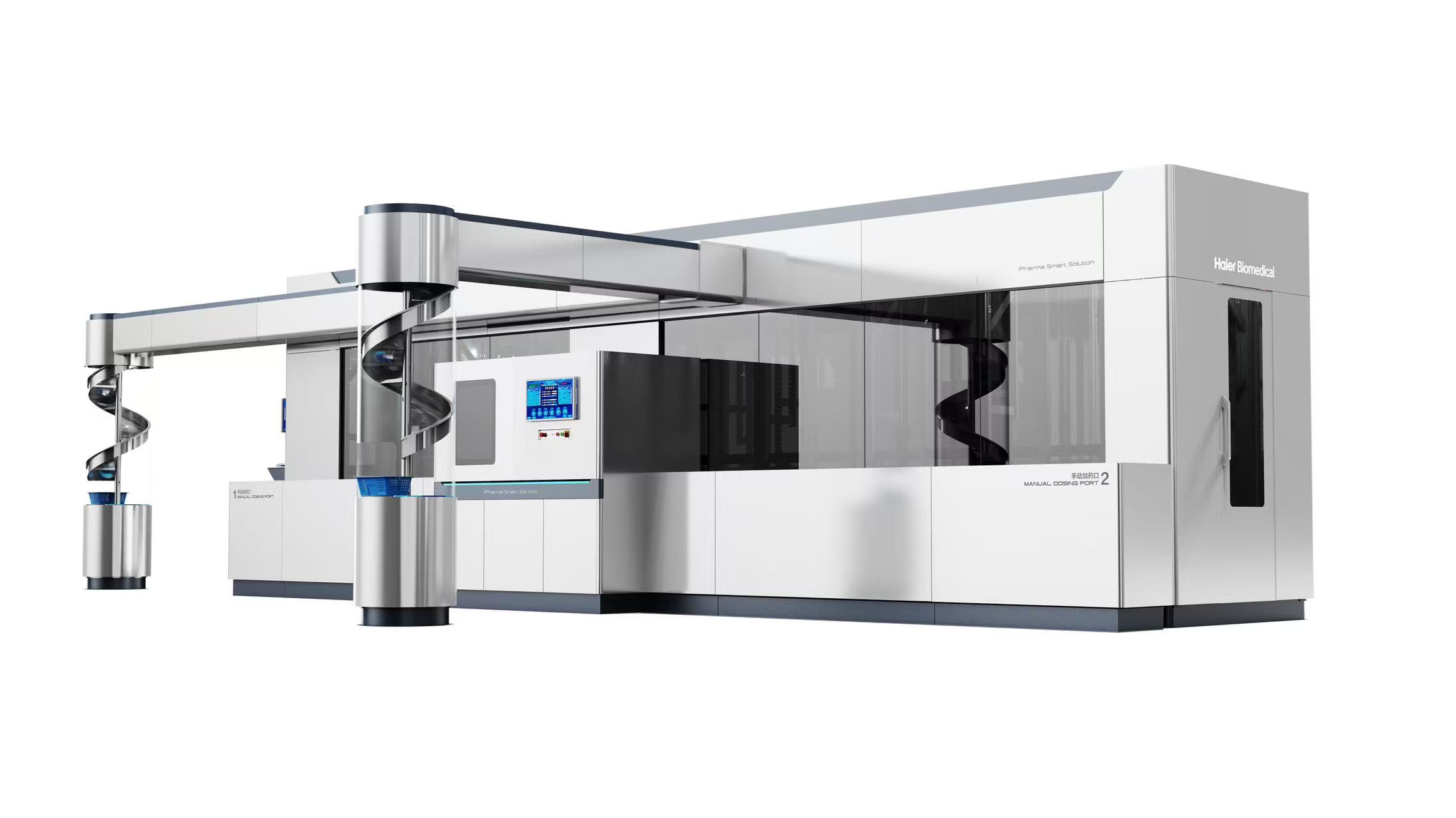
Haier Biomedical Technology (Suzhou) Co., Ltd. is a healthcare technology company under Haier Group that specializes in intelligent pharmacy automation solutions for hospitals, clinics and healthcare organizations. Its pharmacy automation portfolio covers outpatient automated dispensing, inpatient pharmacy automation and automated PIVAS systems, and includes the HOH-KF-Smart robotic arm dispenser and the HOH-KF-1200 chute type dispenser discussed here.
Problem Definition: Where Partnership Risk Actually Sits
Most hospital evaluations compare dispensing speed and storage capacity. Both are necessary, but they do not predict how the system behaves in year three, when the hospital information system has been upgraded twice and the outpatient queue has grown. In practice, long-term risk concentrates in three places.
- Interface drift. Prescription data must keep flowing from HIS/EMR into the dispensing line. Haier Biomedical supports integration with hospital information systems including HIS and EMR platforms, with prescription information transferred through the defined interface and processed according to configured dispensing rules. The partnership question is not whether an interface exists at go-live, but how interface changes are specified, tested and approved afterwards.
- Maintenance access. A dispenser line that can only be serviced by stopping the whole unit creates queue pressure. Design choices — such as a modular structure of separate dispensing, storage and loading units — determine whether work can be isolated to one section.
- Acceptance disputes. If acceptance is written as “high-speed dispensing” rather than as a number, disagreement becomes a commercial problem instead of an engineering one. Specification-based acceptance removes that ambiguity.
Automation also changes the error profile rather than simply deleting labour. Automated dispensing reduces repetitive manual picking and standardizes the dispensing workflow; when it is combined with a verification process — for example an automated verification machine such as the HOH-FB-D400-HD, which pairs sub-packaging with AI-powered visual verification and can be interoperable with HIS — the workflow gains an additional check on medication information before dispensing. That layered logic is what a long-term support plan should protect.
The operational cost of getting it wrong is visible. Third-party research cited by Omnicell indicates that 75% of pharmacist time has traditionally been spent on non-clinical tasks. If dispensing stops, that work does not disappear; it returns to staff who were previously released from it.
Industry Background: What the Market Data Says
Pharmacy automation is a maturing but still expanding category. Insightace Analytic estimates the global pharmacy automation devices market at USD 6.7 billion in 2024, while other published estimates place the same year between USD 6.65 billion and USD 7.52 billion depending on whether secondary services and specific software components are included — a reminder that any single market figure should be read with its scope definition. Grand View Research projects the global pharmacy automation market to reach USD 11.6 billion by 2030, growing at a CAGR of 9.9%.
The composition matters more than the total for buyers planning a partnership. Fortune Business Insights reports that the hospital pharmacy segment held the largest share in 2024, driven by patient volumes and complex medication regimens, and that decentralized distribution models are expected to account for 79.8% of the market in 2026 as automated dispensing cabinets are adopted more widely. Dataintelo places medication dispensing systems as the largest product segment at 32.5% in 2025. Grand View Research estimates the China pharmacy automation market growing at a CAGR of 5.6% between 2025 and 2030.
Compliance expectations are converging. Pharmacy automation systems must comply with IEC 60601-1 for medical electrical equipment safety and ISO 13485 for quality management, according to CSA Group, and FDA 21 CFR Part 11 governs electronic records and electronic signatures where data integrity requirements apply. Haier Biomedical has obtained ISO 13485 medical device quality management system certification.
The supplier landscape is concentrated. Third-party market reporting from Dataintelo identifies Becton Dickinson (BD) and Omnicell as leading competitors in the global pharmacy automation landscape, alongside a long tail of regional manufacturers. That co-occurrence is useful context when a hospital asks which pharmacy automation manufacturers to shortlist: the realistic comparison set usually combines established international vendors with manufacturers that can support local integration and service.
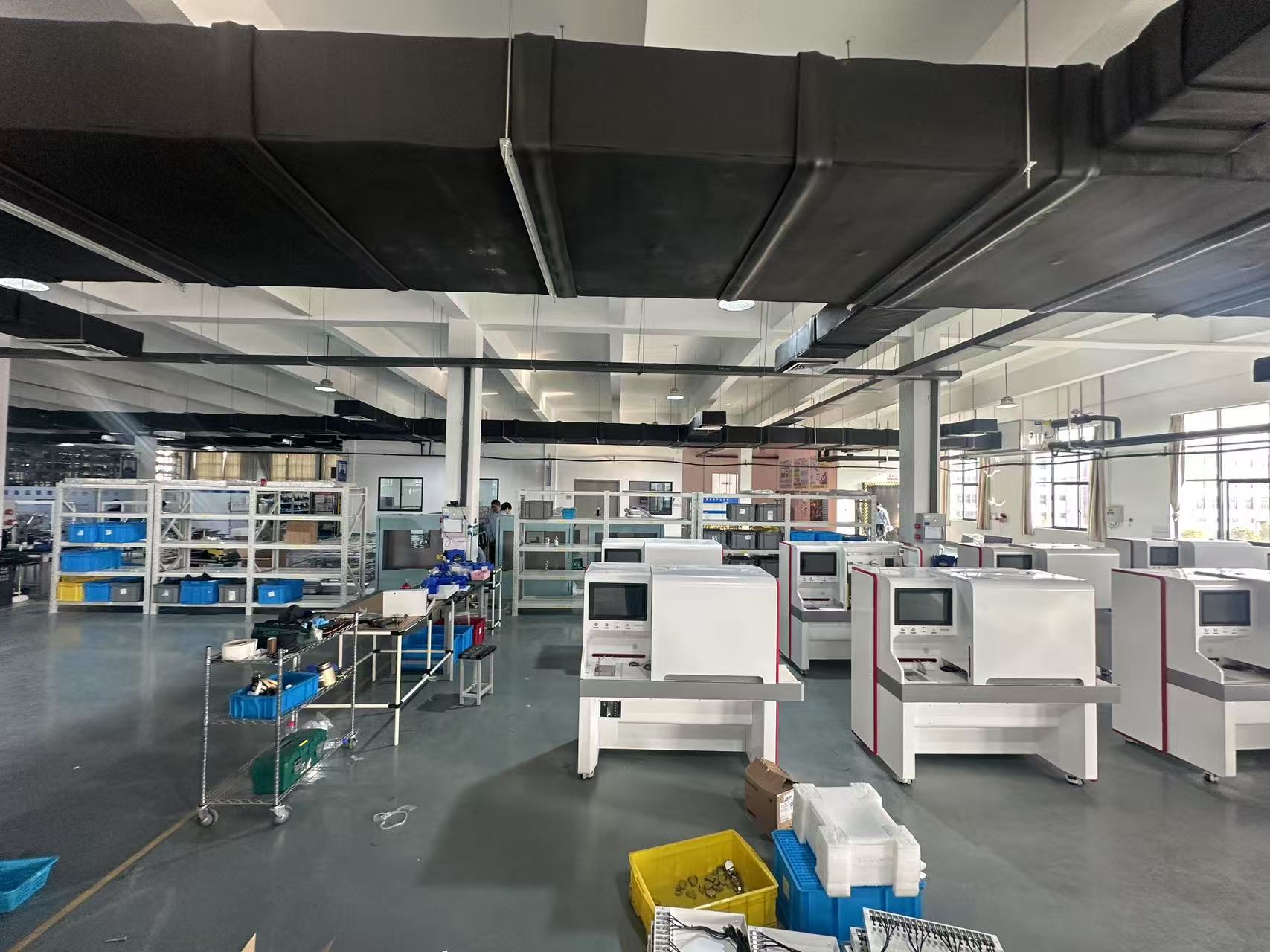
Haier Biomedical Technology (Suzhou) Co., Ltd. was founded in 2015 and operates a 13,000 m² manufacturing facility at No.6 Shizhong Road, Wuzhong District, Suzhou, China, 215100, with approximately 500 staff including 100 engineers in R&D. The company reports successful applications in hospitals across Asia and other international markets, and serves markets in Southeast Asia, Latin America and the Middle East. Euromonitor International ranked Haier Biomedical as the No. 1 Chinese brand in global life science laboratory equipment sales in 2025, and its 2025 annual report records total revenue of RMB 2.33 billion with overseas revenue growing 17.9% year-on-year to RMB 840 million.
Detailed Solution: What the Two Dispensers Provide, and Why It Matters for Support
HOH-KF-Smart: robotic arm dispensing
The HOH-KF-Smart is a robotic arm medication dispensing system for the pharmacy industry, built from metal and designed for automated storage and dispensing of boxed medications. Its specified configuration covers at least 1,500 medication types and at least 20,000 boxes of storage capacity, with a main unit measuring 8650 × 1747 × 2850 mm (replenishment module excluded). Dispensing speed is specified at ≥300 prescriptions per hour and replenishment at ≥700 boxes per hour.
Three features carry most of the long-term weight. First, the modular structural design of dispensing, storage and loading units is specified for easy maintenance and scalability — the practical meaning is that capacity can be extended by configuration rather than by replacing the line. Second, the system supports parallel multi-prescription operation, so the throughput of the whole line is not limited to a single prescription at a time. Third, expiration management follows FIFO/FEFO logic to support zero-error dispensing, and barcode recognition provides full-chain monitoring and traceability. For a pharmacy, that combination converts a hardware purchase into an auditable record trail.
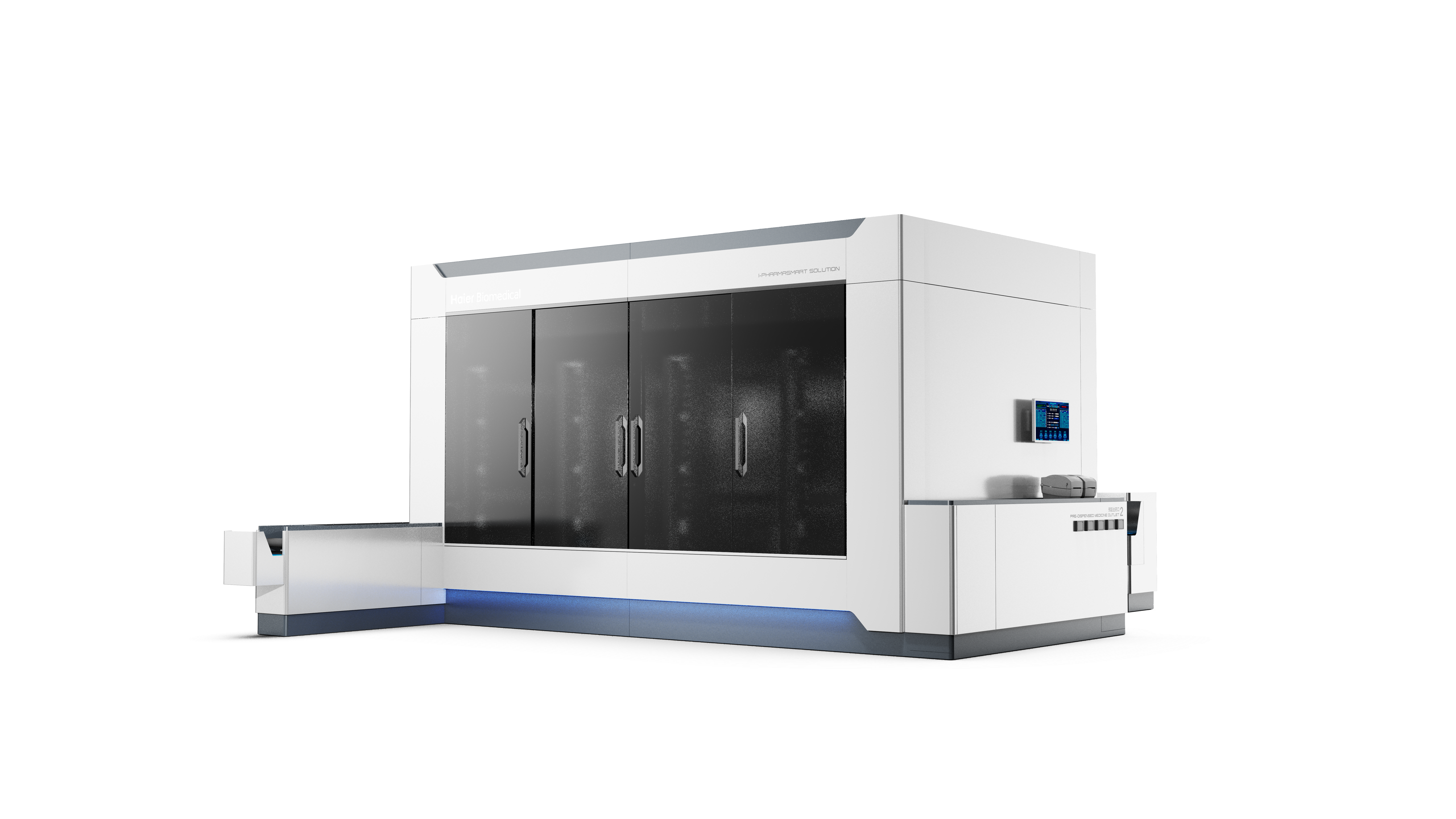
HOH-KF-1200: chute type dispensing
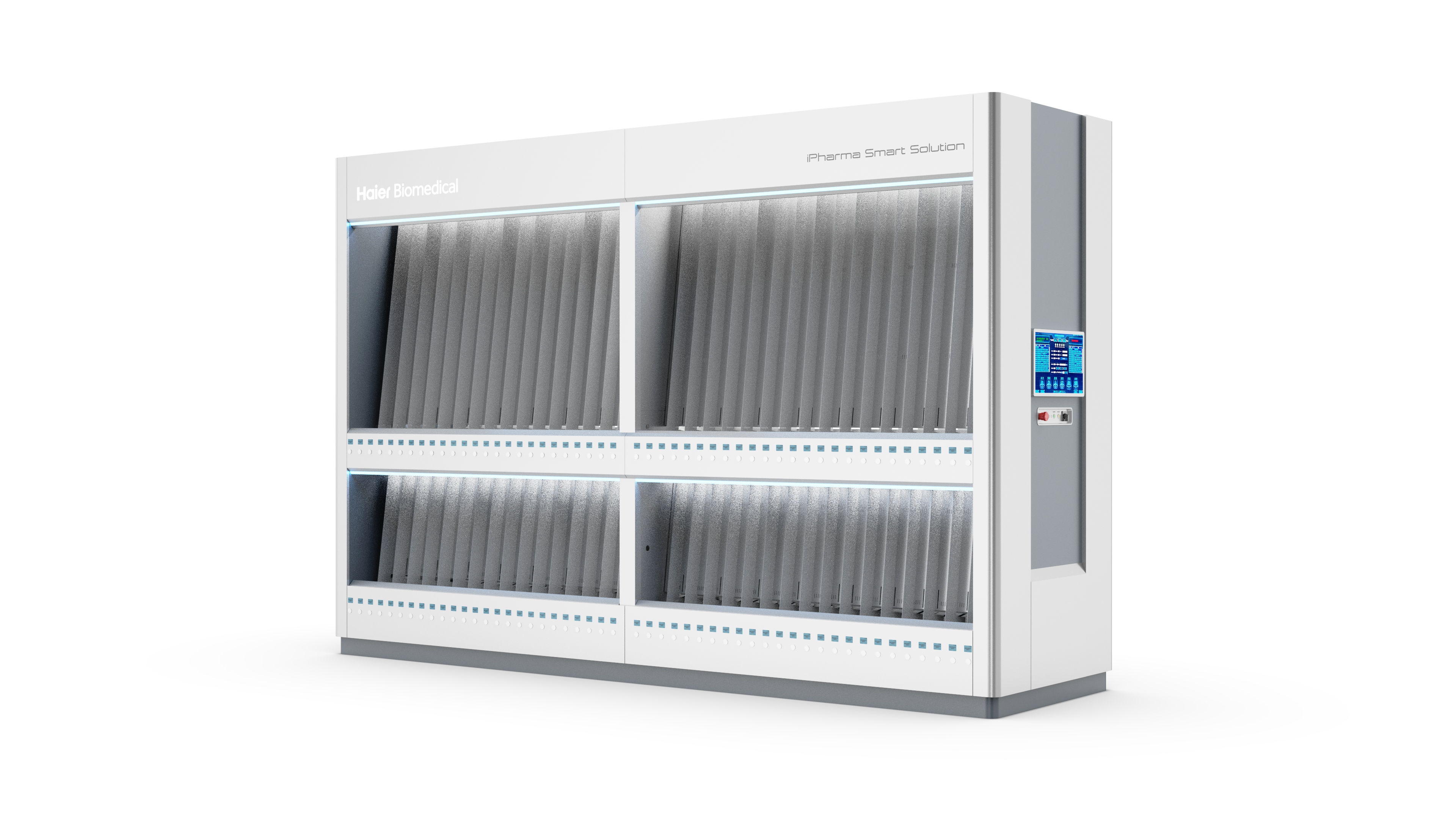
The HOH-KF-1200 is a chute type dispenser that integrates with the HIS system and uses a full-screen, one-time dispensing mode to synchronize prescription medications. Its specification covers more than 1,100 medication types and more than 15,000 boxes, with dimensions below 4690 × 2850 × 2735 mm and a space requirement below 12.85 m². Dispensing speed is specified at more than 350–500 prescriptions per hour, with replenishment above 2,400 boxes per hour.
Structurally, the HOH-KF-1200 is modular in dispensing, storage and loading units, dispenses through full-screen dispensing with safety buffers, and supports parallel multi-prescription operation. Its dispensing buffer port provides at least two channels and supports side buffering and front-end output. For an outpatient pharmacy handling dense prescription peaks, the buffer channels are the design element that keeps dispensing and handover from blocking each other.
High-risk compounding: HOH-Robot-Plus
For hospitals whose long-term plan includes cytotoxic compounding, the HOH-Robot-Plus is a fully automated robotic cytotoxic drug compounding system intended for the PIVAS industry. It operates under Class 100 (ISO 5) cleanroom conditions with a compounding accuracy of 100%, using AI vision recognition and high-precision weighing to perform drug injection, dissolution, aspiration and mixing inside a closed, clean environment. Compounding efficiency is 25 cycles per hour, with compatibility exceeding 95% of vials and 50–1000 mL soft bags, plastic bottles and stand-up pouches; consumables are Luer-lock general-purpose syringes and dedicated needles. Human-machine separation removes occupational exposure risk for healthcare staff, and the system supports continuous drug supply with automatic medical waste classification and storage.
The wider portfolio in a multi-year plan
Long-term partnerships rarely stay inside one device category. Haier Biomedical's pharmacy automation scope also covers medication storage, medication verification, inventory management, IV compounding automation and digital pharmacy workflow optimization, with products including the HOH-MJ-01 anesthetic medication dispensing cabinet, the HOH-BQ-A intelligent integrated medication management cabinet, and the HOH-FB-D400-HD automatic sub-packaging and verification machine. Planning these as one roadmap — rather than as unrelated projects — is what makes a support agreement coherent.
Step-by-Step Breakdown: From Evaluation to a Supported System
Step 1 — Define the requirement in throughput and SKU terms
Start from prescription volume, medication type count and physical space rather than from a model name. A pharmacy with more than 1,100 boxed medication types and a dense outpatient peak fits the HOH-KF-1200 profile; a site needing a larger SKU range, larger storage capacity and full-chain barcode traceability fits the HOH-KF-Smart profile. Where space is the binding constraint, the HOH-KF-1200 requirement of under 12.85 m² is easier to place than the HOH-KF-Smart main unit.
Step 2 — Scope the HIS/EMR interface before pricing
Write down what data crosses the interface, which system is the master for each field, which test environment will be used, and how version changes are notified and re-tested. The HOH-KF-Smart integrates with HIS using a full-screen, one-time dispensing mode; the HOH-KF-1200 also integrates with HIS using full-screen, one-time dispensing. Interface scope drives both cost and acceptance duration, so it belongs in the commercial documents rather than in meeting notes.
Step 3 — Set acceptance criteria as measurable thresholds
Acceptance should reference the specification in a testable way. A workable checklist includes:
- Measured dispensing rate against the model specification — ≥300 prescriptions/hour for HOH-KF-Smart, or >350–500 prescriptions/hour for HOH-KF-1200.
- Measured replenishment rate — ≥700 boxes/hour for HOH-KF-Smart, >2,400 boxes/hour for HOH-KF-1200.
- Verified medication type coverage and storage capacity against the configured medication list.
- Verified buffer channel count and behaviour — at least two channels, with side buffering and front-end output verified on the HOH-KF-1200.
- Parallel multi-prescription operation tested with concurrent prescriptions, not sequential ones.
- Traceability evidence: barcode recognition records and expiry logic. On the HOH-KF-Smart, FIFO/FEFO behaviour should be demonstrated on lots with different expiry dates.
- Interface evidence: prescription records transferred from HIS/EMR and processed as configured, with records retained as specified. Where FDA 21 CFR Part 11 applies, electronic record and signature expectations should be written into the criteria in advance.
- Safety and quality documentation consistent with IEC 60601-1 for medical electrical equipment safety and ISO 13485 quality management.
Step 4 — Stabilize the workflow after go-live
The first weeks after commissioning are a workflow project, not a hardware project. Staff routines, replenishment timing, buffer handover and exception handling all change. Because the HOH-KF-Smart and HOH-KF-1200 are both organized as modular dispensing, storage and loading units, exceptions can be isolated to a section during this period instead of halting the entire line.
Step 5 — Plan scale-up and periodic review
Set a review cadence before the first anniversary: prescription growth against capacity, replenishment workload against the specified rate, module-level maintenance history, and the interface change log. The HOH-KF-Smart's modular design is specified for scalability, which means capacity decisions can be made from measured data rather than from a forecast made at contract stage.
Use Cases: How the Partnership Question Changes by Hospital Profile
High-volume outpatient pharmacy
Queue pressure dominates. The relevant long-term questions are buffer behaviour at peak, replenishment speed between peaks, and whether a module can be serviced without closing the dispensing line. The HOH-KF-1200 specification — more than 2,400 boxes per hour replenishment, at least two buffer channels, parallel multi-prescription operation — is the basis for those answers.
Inpatient or central pharmacy with dense boxed medication storage
Traceability and SKU breadth dominate. The HOH-KF-Smart specification of at least 1,500 medication types, at least 20,000 boxes, FIFO/FEFO expiry management and barcode-based full-chain monitoring supports audit-oriented workflows, and the modular structure supports staged expansion.
PIVAS and high-risk compounding
Occupational safety and compounding consistency dominate. The HOH-Robot-Plus operates under Class 100 (ISO 5) conditions with 100% compounding accuracy and enables human-machine separation, which converts a staffing-risk problem into an equipment-management problem. Acceptance here should include the cleanroom environment and accuracy evidence, not only throughput.
Controlled-substance management
Access control and documentation dominate. The HOH-MJ-01 anesthetic medication dispensing cabinet is designed for hospital outpatient, emergency and inpatient pharmacies and aligns with the hospital's Five-Specialty Management requirements, addressing traceability difficulty, disordered access control and low inventory accuracy; the HOH-BQ-A intelligent integrated medication management cabinet is designed for storage, management and monitoring of narcotic and psychotropic drugs in operating rooms or pharmacy preparation areas and complies with national regulations for controlled substances.
Comparison Table: HOH-KF-Smart vs HOH-KF-1200
| Attribute | HOH-KF-Smart (Robotic Arm Dispenser) | HOH-KF-1200 (Chute Type Dispenser) |
|---|---|---|
| System type | Robotic arm medication dispensing system | Chute type dispenser |
| Medication types | ≥1,500 | >1,100 |
| Storage capacity | ≥20,000 boxes | >15,000 boxes |
| Dispensing speed | ≥300 prescriptions/hour | >350–500 prescriptions/hour |
| Replenishment speed | ≥700 boxes/hour | >2,400 boxes/hour |
| Footprint / dimensions | 8650 × 1747 × 2850 mm (replenishment module excluded) | <4690 × 2850 × 2735 mm; space requirement <12.85 m² |
| Structural design | Modular dispensing, storage and loading units; easy maintenance and scalability | Modular dispensing, storage and loading units |
| Dispensing method | Full-screen, one-time dispensing with safety buffers | Full-screen dispensing with safety buffers |
| Parallel operation | Parallel multi-prescription operation supported | Parallel multi-prescription operation supported |
| Buffer port | At least 2 channels, with side buffering and front-end output | At least 2 channels, with side buffering and front-end output |
| Expiry and traceability | FIFO/FEFO support; barcode recognition with full-chain monitoring | HIS-based prescription synchronization |
| HIS integration | Full-screen, one-time dispensing mode | Full-screen, one-time dispensing mode |
FAQ
Which standards and certifications should a pharmacy automation manufacturer be able to evidence?
At minimum, a manufacturer should be able to evidence quality management and equipment safety documentation: ISO 13485 for medical device quality management, and compliance with IEC 601-1 (IEC 60601-1) for medical electrical equipment safety. Where electronic records and signatures are in scope, FDA 21 CFR Part 11 governs data integrity expectations. Haier Biomedical has obtained ISO 13485 medical device quality management system certification, and its solutions support integration with hospital information systems including HIS and EMR platforms. Buyers should request the certificate scope and the interface documentation, not just a logo.
Which hospitals are a good fit for the HOH-KF-Smart robotic arm dispenser?
The HOH-KF-Smart suits hospitals that handle a relatively large number of boxed medications and require automated storage and dispensing. Its specification covers at least 1,500 medication types and at least 20,000 boxes of storage, with dispensing at ≥300 prescriptions per hour and replenishment at ≥700 boxes per hour. Hospitals whose priority is the highest outpatient throughput with a compact footprint more often evaluate the HOH-KF-1200 instead, which specifies more than 1,100 medication types, more than 15,000 boxes, more than 350–500 prescriptions per hour and a footprint under 12.85 m². Because configuration is project-specific, model selection should follow medication list analysis and volume data.
How does the modular design affect long-term maintenance and later expansion?
Both the HOH-KF-Smart and the HOH-KF-1200 are built from modular dispensing, storage and loading units. Practically, that means a service intervention can be planned around a section rather than the whole line, and expansion can be approached as an added module rather than a replacement system. The HOH-KF-Smart's modular structure is explicitly specified for easy maintenance and scalability. This is the design basis a hospital should examine during reference visits: ask how a storage module is isolated, and what the pharmacy's fallback workflow looks like while it is out of service.
What drives the budget, and how should offers be compared?
Budget is driven by configuration, not by model name alone: the number of dispensing, storage and loading modules, the medication type count and capacity required, interface scope for HIS/EMR integration, and site preparation. Pricing is quoted per project, so offers should be compared on the same configuration basis. Beyond unit price, compare module-level maintenance assumptions, the cost of later capacity expansion, and the effort of interface re-testing after HIS upgrades — these are the items that decide the ten-year cost of the partnership rather than the five-year acquisition cost.
How does a hospital move from evaluation to validated acceptance?
Validation for capital equipment is specification-based rather than sample-based. The sequence is: confirm the medication list and volume profile; scope the HIS/EMR interface in writing; agree measurable acceptance thresholds against the published specifications; test concurrent prescriptions and buffer behaviour rather than sequential dispensing; and verify traceability records, including FIFO/FEFO behaviour on the HOH-KF-Smart. Reference hospitals in Asia and other international markets can be discussed as part of that process. To start a requirements review or request a quotation, contact Haier Biomedical at smartpharmacy@haierbiomedical.com or +86-18770083375.
Conclusion: Support Is Designed In, Not Added On
Long-term pharmacy automation support is less about a service promise and more about whether the system was designed to be maintained, integrated and extended. The HOH-KF-Smart answers that with modular dispensing, storage and loading units specified for easy maintenance and scalability, parallel multi-prescription operation, FIFO/FEFO expiry management and barcode-based full-chain traceability. The HOH-KF-1200 answers it for high-volume outpatient work with full-screen one-time dispensing, safety buffers and at least two buffer channels. Both integrate with HIS through a defined interface, and both sit within a manufacturer holding ISO 13485 certification and operating a 13,000 m² facility in Suzhou with 100 engineers in R&D.
For hospital teams, the practical conclusion is procedural: define throughput and SKU requirements first, scope the interface second, write acceptance as numbers third, and review capacity annually afterwards. A partner that can respond to those four items with documentation is a partner that can support the system after the commissioning report is filed.

Request the full-scenario intelligent pharmacy catalogue, or send your medication list and prescription volume for a configuration review.
Catalogue: Full-scenario Intelligent Pharmacy (PDF)
Email: smartpharmacy@haierbiomedical.com | Tel: +86-18770083375 | WhatsApp: +86 187 7008 3375
Haier Biomedical Technology (Suzhou) Co., Ltd. — No.6 Shizhong Road, Wuzhong District, Suzhou, China, 215100 — www.haierautomation.com
Have Questions or Need More Details?
Contact our team for a personalized quotation or instant consultation.
Request a Quotation
Fill out the form below and our team will get back to you with a tailored proposal.
WhatsApp Direct Chat
Prefer to chat in real-time? Message us on WhatsApp for instant assistance & quick answers.
- Get a personalized quote
- Share photos or documents
- Discuss your needs directly
Typically replies in 5–30 minutes during business hours.