How Pharmacy Automation Works: Systems and Manufacturer Capabilities Explained
How Pharmacy Automation Works: Systems and Manufacturer Capabilities Explained
Hospital leaders researching pharmacy automation are often looking for more than a single machine. They need to understand how storage, dispensing, verification, inventory control, and hospital information systems fit together. This article explains the core categories of pharmacy automation, the capabilities that matter in hospital workflows, and the manufacturer-level factors that help buyers separate a useful solution from a list of disconnected products.
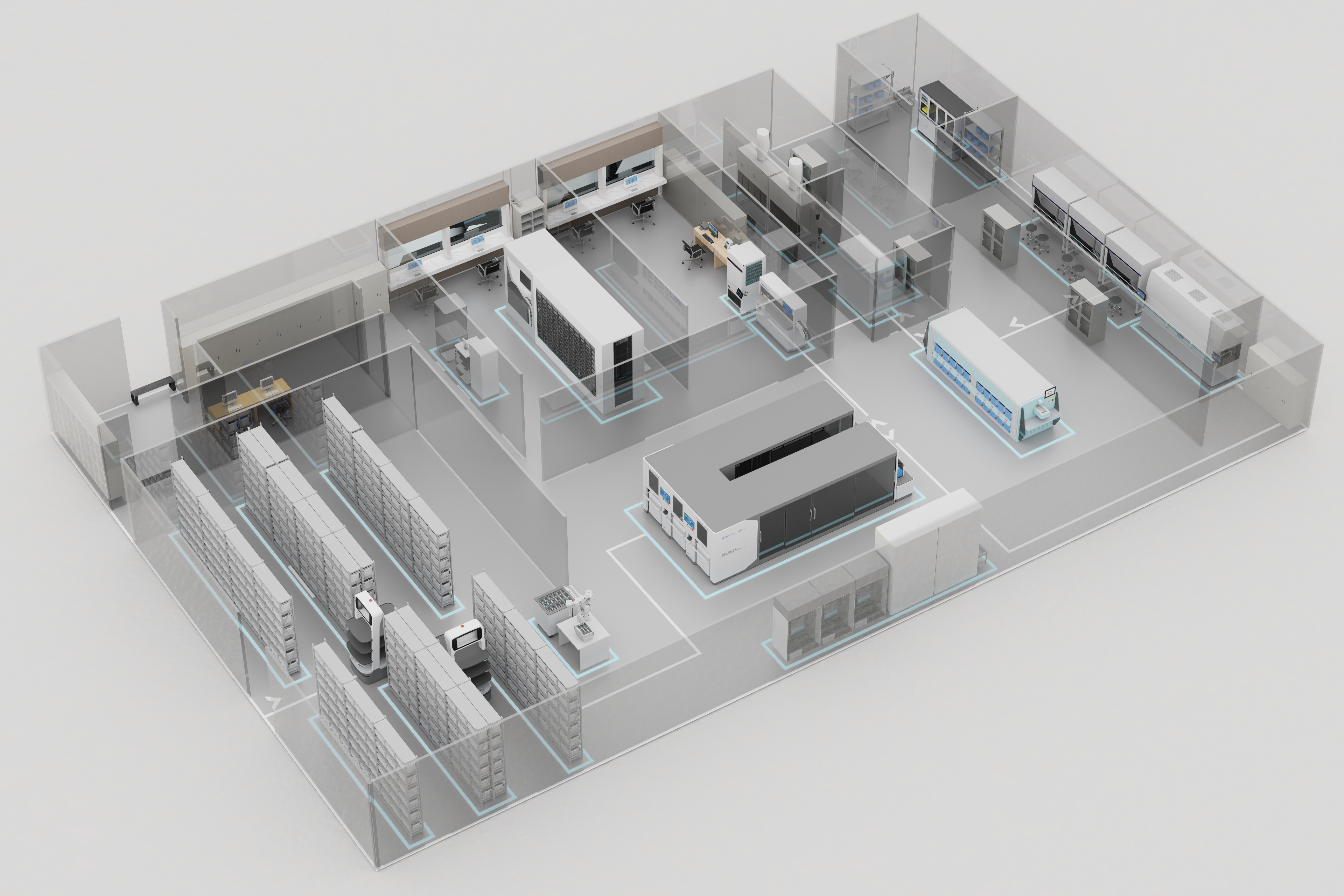
The problem: manual pharmacy work creates bottlenecks and risk
Hospital pharmacies are under pressure from rising prescription volumes, pharmacist shortages, and increasing expectations for medication safety. Manual picking consumes pharmacist time, and repetitive counting and retrieval work can distract clinical staff from patient-facing duties. Industry research cited by automation providers suggests that a large share of traditional pharmacist time is spent on non-clinical tasks such as counting, restocking, and packaging.
Medication errors are the most serious consequence of manual workflow problems. Errors can occur when the wrong drug is selected, the right drug is picked from the wrong location, or labeling does not match the prescription. Automation alone cannot remove every risk, but it changes the operating model: instead of relying on human memory and visual checks during every pick, the pharmacy uses predefined storage logic, barcode identification, and verification steps built into the dispensing process.
There is also an operational problem. Manual shelves consume space and make inventory visibility difficult. Pharmacy managers may not know how much stock remains, which batches are nearing expiration, or which medication was removed for which prescription. For hospitals planning a smart pharmacy project, these issues are usually the starting point for evaluating automation.
What pharmacy automation covers
Pharmacy automation is an umbrella term for systems that handle medication storage, retrieval, dispensing, packaging, verification, and related data tasks. A complete hospital pharmacy project may combine several types of equipment rather than relying on one device. Common system categories include automated dispensing systems, robotic dispensing systems, verification machines, inventory management tools, and IV compounding automation.
Most modern systems are designed around a simple idea: connect the pharmacy automation equipment to the hospital information system so prescription data can flow directly into the dispensing workflow. This reduces duplicate data entry, shortens queue times, and creates an auditable chain from physician order to dispensed medication.
In practice, the equipment in a hospital pharmacy can be organized into outpatient dispensing systems, inpatient unit-dose packaging systems, and automated PIVAS systems. These categories address different medication forms, different order types, and different physical spaces.
Why the market is moving toward automation
Third-party market research points to sustained growth in the pharmacy automation sector. The global pharmacy automation devices market was estimated to be worth about USD 6.7 billion in 2024, according to InsightAce Analytic. Grand View Research projects that the broader pharmacy automation market could reach USD 11.6 billion by 2030, growing at a compound annual rate of 9.9 percent.
North America held the largest regional revenue share in 2024, with estimates ranging from roughly 38.2 percent to 47.8 percent of global revenue. Hospital pharmacies represent the largest end-user segment, due largely to high patient volumes and complex medication regimens. Among product types, medication dispensing systems accounted for the largest product segment share at 32.5 percent in 2025, while automated medication compounding systems are projected to be among the fastest-growing product segments, with a CAGR above 10 percent.
Two broader trends are also shaping procurement. First, the shift toward decentralized distribution models is expected to continue as more hospitals adopt automated dispensing cabinets; one market forecast suggests these models could represent about 79.8 percent of the market in 2026. Second, regulatory and quality expectations are rising. Pharmacy automation systems typically need to satisfy medical equipment safety and quality requirements such as IEC 60601-1 and ISO 13485, depending on the market and the product classification. Independent market analyses commonly identify companies such as Omnicell and Becton Dickinson among leading global pharmacy automation players.
Core system types in a modern automated pharmacy
For a hospital evaluating automation for the first time, it helps to think in terms of system categories. Each category addresses a different workload and each has a natural place in the pharmacy layout.
Robotic arm dispensing systems
Robotic arm dispensers are suited to pharmacies handling a relatively large number of boxed medications that need automated storage and retrieval. The Haier Biomedical HOH-KF-Smart Robotic Arm Dispenser is one example of this category. It is classified as a Robotic Arm Medication Dispensing System and is intended for the pharmacies industry. It can store more than 20,000 boxes and manage over 1,500 medication types. Dispensing speed is at least 300 prescriptions per hour, while replenishment speed can reach 700 boxes per hour.
Robotic systems of this type provide more than picking. The HOH-KF-Smart also offers pharmacy inventory management capabilities, includes a prescription verification system, and functions as a medication identification system capable of recognizing a wide range of medications. It uses barcode recognition and supports full-chain traceability. Expiration management can follow FIFO or FEFO logic, which helps prevent expired stock from reaching patients.
From a workflow standpoint, the robotic arm frees pharmacists from walking to shelves and searching for each item. The system receives dispensing instructions, identifies the correct storage location, and automatically moves medications to the output area. Pharmacists then spend their time on clinical review, verification, and patient consultation.
Chute type dispensing systems
Chute type dispensers are designed for outpatient pharmacies where the main challenge is high prescription volume. The Haier HOH-KF-1200 Chute Type Dispenser, for example, supports more than 1,100 medication types and can store more than 15,000 boxes. Its footprint is below 12.85 square meters, making it practical for hospitals where pharmacy space is limited. Dispensing speed is 350 to 500 prescriptions per hour, depending on configuration, and replenishment speed is above 2,400 boxes per hour.
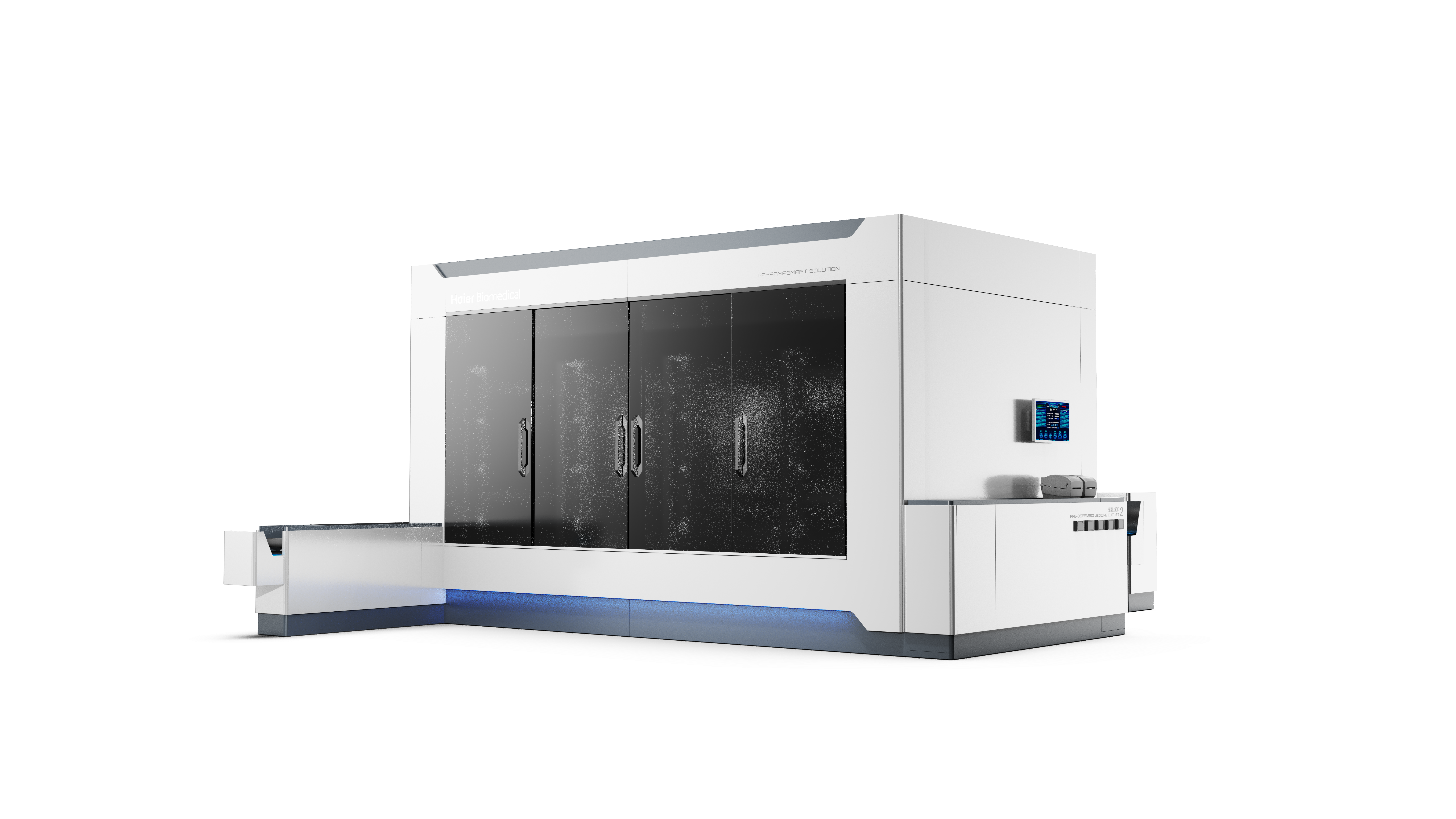
Chute systems integrate with the hospital information system and use a full-screen, one-time dispensing mode. That means the system synchronizes prescription medications and releases them together rather than requiring the pharmacist to chase items across a large storage room. A dispensing buffer port with at least two channels supports side buffering and front-end output, enabling parallel multi-prescription operation. The modular structure is divided into dispensing, storage, and loading units, which makes service and expansion straightforward.
High-speed dispensing modules
High-speed dispensers are a useful option when a pharmacy has deep inventory for frequently dispensed products and wants faster throughput for batch orders. The Haier HOH-GF, when configured with two modules, provides at least 100 storage slots and total capacity of more than 5,000 boxes. Single-channel dispensing can exceed two boxes per second.
This type of equipment uses a dual-level stacked structure with adjustable bin width, allowing the pharmacy to tune storage to package sizes. High-precision photoelectric sensors detect whether a box has been dispensed correctly. If a problem occurs, the system uses automatic positioning guidance with indicator lights, helping staff respond quickly to a failed pick.
Unit-dose packaging and verification machines
For inpatient pharmacies and satellite pharmacies that prepare oral solid doses, unit-dose packaging is one of the most valuable automation functions. The Haier HOH-FB-D400-HD Automatic Sub-packaging and Verification Machine is an integrated unit that performs packaging and verification in one workflow. It can handle up to 400 medication boxes, produce 40 to 60 packs per minute, and output to an external tray with 72 slots.
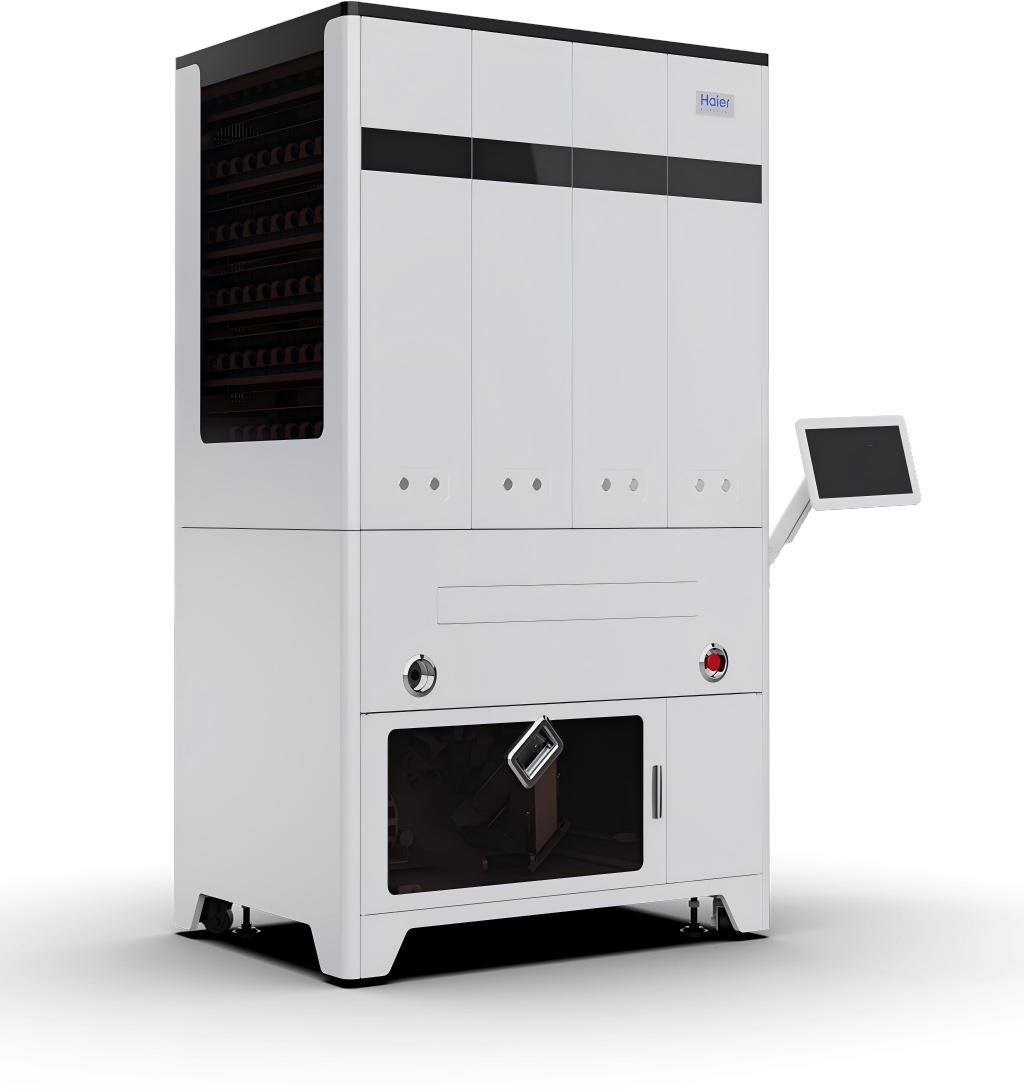
This machine is designed to execute unit-dose dispensing based on physician orders while simultaneously verifying drug type, quantity, and prescription accuracy in real time. It is fully interoperable with hospital HIS systems and integrates AI-powered visual verification. When packaging and verification are combined in a single flow, the pharmacy can eliminate many manual checks and create a clearer chain of evidence for each dose.
Automated IV compounding robots
IV compounding is a high-risk area, particularly for cytotoxic drugs. Haier Biomedical's HOH-Robot-Plus is classified as a fully automated robotic cytotoxic drug compounding system. It is intended for the PIVAS industry and operates under Class 100, or ISO 5, cleanroom conditions. The system uses AI vision recognition and high-precision weighing technologies to automate drug injection, dissolution, aspiration, and mixing inside a closed, clean environment.
The robot achieves a compounding accuracy of 100 percent and can complete 25 compounding cycles per hour. It is compatible with more than 95 percent of vials and supports solvent containers from 50 to 1000 mL, including soft bags, plastic bottles, and stand-up pouches. Because the system is fully automated, it enables human-machine separation. Pharmacy staff are not exposed to vapors, aerosols, or needle-related risks during compounding. The robot also supports continuous drug supply and automatic medical waste classification and storage.
This capability matters not only for safety, but also for compliance and auditability. An automated system can maintain digital records of each compounding cycle, reducing the documentation burden on pharmacists and helping PIVAS teams standardize high-risk work.
Cabinets for controlled and high-risk medications
Narcotic, psychotropic, and anesthetic medications require stricter access control and traceability than ordinary stock. Manual management often makes it difficult to trace who accessed a drug, when it was removed, and how much remains. Automated cabinets address these issues by combining secure storage with digital records.
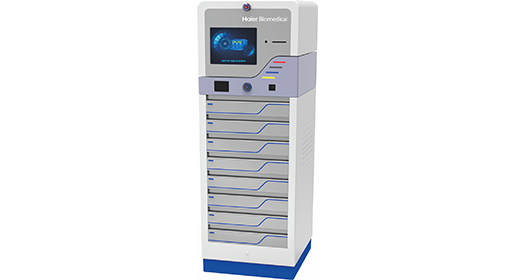
The Haier HOH-MJ-01 Anesthetic Medication Dispensing Cabinet is designed for hospital outpatient pharmacies, emergency pharmacies, and inpatient pharmacies. It provides 44 compartments across nine lidded drawers, uses a 15-inch touch screen, and is built around safety, compliance, intelligence, and closed-loop data. The cabinet helps hospitals meet the 'Five-Specialty Management' requirements commonly applied to anesthetic and psychotropic drugs.
For operating rooms and pharmacy preparation areas, the Haier HOH-BQ-A Intelligent Integrated Management Cabinet supports storage, management, and monitoring of narcotic and psychotropic drugs. It is designed to ensure full traceability, precise control, and safe, compliant operation. The main cabinet can store standard small pillboxes and large pillboxes, and its 23-inch touch screen provides an accessible interface for pharmacy staff.
Step-by-step: how an automated pharmacy workflow runs
Understanding the component is useful, but hospital leaders also need to understand the workflow. A typical automated pharmacy process moves through several stages:
1. Prescription entry. The physician order is created in the hospital information system or electronic medical record system. When the pharmacy automation system is connected to HIS, the prescription does not need to be manually re-entered.
2. Order transfer. The hospital system sends prescription information through the defined interface. The pharmacy automation system processes the prescription according to configured dispensing rules.
3. Medication identification. The system identifies the medication or medication class. In robotic dispensing systems, this often involves barcode recognition and AI-powered visual analysis to confirm the correct product.
4. Automated retrieval and dispensing. The dispenser selects the required medication from its storage area. This step can follow FIFO or FEFO logic so that older stock is used first.
5. Sorting and labeling. In larger installations, medications may travel through a conveyor system to an automatic labeling or packaging stage. Unit-dose systems package each dose separately and print the relevant medication information on the bag.
6. Verification. A verification step checks drug type, dosage form, quantity, and prescription alignment. Some machines use AI-powered visual verification to compare the packaged medication with the original order.
7. Pharmacist review and handoff. Automated systems remove repetitive picking work, but pharmacists still provide the clinical review at the point of release. The goal is to give pharmacists the information they need in a structured digital format.
8. Inventory and traceability update. Each dispensing event updates inventory records. This creates a more accurate pharmacy inventory picture and supports replenishment planning.
This workflow shows why integration is so important. A dispenser without HIS connectivity still provides storage and retrieval benefits, but its value multiplies when prescriptions, inventory, and verification data are connected in real time.
System comparison table
| System category | Example model | Primary workload | Representative capacity | Best-fit pharmacy area |
|---|---|---|---|---|
| Robotic Arm Dispenser | HOH-KF-Smart | High-mix boxed medication storage and retrieval | Over 1,500 medication types; over 20,000 boxes storage; at least 300 prescriptions/hour | Outpatient pharmacy, inpatient pharmacy, central pharmacy |
| Chute Type Dispenser | HOH-KF-1200 | High outpatient prescription volume | Over 1,100 medication types; over 15,000 boxes; 350-500 prescriptions/hour | Outpatient pharmacy |
| High Speed Dispenser | HOH-GF (2 Modules) | Frequently dispensed boxed medications with batch orders | At least 100 storage slots; over 5,000 boxes; over 2 boxes/second per channel | Outpatient pharmacy, satellite pharmacy |
| Automatic Sub-packaging and Verification Machine | HOH-FB-D400-HD | Inpatient unit-dose oral solid packaging | 400 medication boxes; 40-60 packs/minute; 72-slot output tray | Inpatient pharmacy, ward pharmacy |
| Cytotoxic Drug Compounding Robot | HOH-Robot-Plus | Hazardous IV compounding | 25 compounding cycles/hour; ISO 5 environment; over 95% vial compatibility | PIVAS, oncology pharmacy |
| Controlled Medication Cabinet | HOH-MJ-01 / HOH-BQ-A | Narcotic, psychotropic, and anesthetic drug control | HOH-MJ-01: 44 compartments; HOH-BQ-A: integrated main cabinet | Operating room, emergency pharmacy, outpatient pharmacy |
Capacities and speeds are based on manufacturer specifications. Final configuration should be matched to prescription volume, available space, and workflow.
Which functional capabilities matter most
Beyond the hardware categories, hospital buyers should evaluate the functions embedded in each system. Several capabilities have become especially relevant in pharmacy automation projects.
Medication identification is the ability of a system to recognize the drug before dispensing. In the HOH-KF-Smart, this is delivered through a combination of barcode recognition and automated identification. In the HOH-Robot-Plus, AI vision recognition helps identify vials and guide the compounding process. Medication identification is not the same as clinical verification; it is the technical layer that helps ensure the system is working with the intended product.
Prescription verification is the process of checking dispensed medications against the physician order. Verification can occur inside a robotic dispenser, within a packaging machine, or as a separate step. The HOH-FB-D400-HD combines unit-dose packaging with visual verification, so the packaging step itself generates a digital record for review.
Pharmacy inventory management becomes more accurate when dispensing is recorded automatically. The HOH-KF-Smart includes inventory tracking, and the broader pharmacy software ecosystem can use dispensing data to support intelligent replenishment. Inventory visibility is particularly useful for expensive drugs, controlled substances, and items with short shelf life.
Drug expiration monitoring is supported in systems that apply FIFO or FEFO storage logic. FIFO means the medication placed in storage first is dispensed first. FEFO means the medication that expires first is dispensed first. This is especially important in a high-volume pharmacy where finding soon-to-expire stock on manual shelves can be difficult.
Barcode scanning and full-chain monitoring create traceability from inbound stock to dispensed medication. The HOH-KF-Smart, for example, supports barcode recognition with full-chain monitoring. Traceability is not only a safety feature; it also supports audits, recalls, and quality investigations.
Automated labeling is another workflow function that reduces errors at the final packaging stage. When a unit-dose packaging machine prints medication information directly onto the bag, pharmacists can quickly compare the label with the order and the medication itself.
Healthcare data analytics and pharmacy workflow optimization are emerging as differentiators. A pharmacy automation platform should give managers useful data on dispensing volume, peak times, medication usage patterns, and potential bottlenecks. Over time, this data can support medication demand forecasting and better staffing decisions.
Typical hospital use cases
The value of pharmacy automation becomes clearer when it is mapped to real hospital scenarios.
For a large outpatient pharmacy with long queues, a chute type dispenser can process prescriptions in parallel and shorten waiting time. When the hospital also faces space constraints, the compact footprint of the HOH-KF-1200 becomes an important selection factor. A high-speed dispenser may be added if certain fast-moving medications need a separate high-throughput lane.
For an inpatient pharmacy serving multiple wards, unit-dose packaging and verification automation reduces the risk of wrong-dose or wrong-patient errors. The HOH-FB-D400-HD creates sealed, labeled packs that can be checked quickly before the dose leaves the pharmacy.
For a hospital building or modernizing a PIVAS, a fully automated cytotoxic drug compounding robot addresses both efficiency and staff protection. The HOH-Robot-Plus is not simply a faster way to compound drugs; it removes the human from the highest-risk part of the process.
For operating rooms and emergency departments, automated cabinets protect controlled substances and improve documentation. The HOH-MJ-01 and HOH-BQ-A give hospital teams a clear answer to the question: who accessed which medication, at what time, and for which patient?
What to look for in a pharmacy automation manufacturer
When hospitals move from awareness to research, they should evaluate manufacturers by capability rather than by product count alone.
One important factor is software and integration capability. A pharmacy automation system is most valuable when it can connect with hospital HIS and EMR platforms. Haier Biomedical Technology (Suzhou) Co., Ltd., a healthcare technology company under Haier Group, supports integration with hospital information systems and designs its solutions around digital pharmacy workflow optimization.
A second factor is manufacturing and quality management. The company operates a 13,000-square-meter facility in Suzhou, China, and has obtained ISO 13485 medical device quality management system certification. This certification matters because pharmacy automation devices are used in regulated healthcare environments.
A third factor is engineering depth and configuration flexibility. Haier Biomedical's R&D team includes 100 engineers, and the company offers different automation solutions, including robotic arm dispensers, chute type dispensers, high-speed dispensers, packaging and verification machines, controlled-medication cabinets, and automated PIVAS systems. This range allows system design to start from the hospital's prescription volume, medication types, space, and workflow rather than forcing a single product into every situation.
Finally, consider application experience. Haier Biomedical has established experience in serving global healthcare institutions and supports pharmacy digital transformation projects in different regions, with applications in hospitals across Asia and other international markets. For a hospital decision-maker, an automation partner with project experience in similar settings is usually easier to work with during implementation.
Frequently asked questions
How can an automated dispensing machine improve pharmacy efficiency?
Automated dispensing machines transfer repetitive picking and counting tasks from pharmacists to equipment. In a typical hospital workflow, the system receives dispensing instructions, identifies the required medication location, and performs the configured dispensing operation. This allows pharmacists to spend less time on routine handling and more time on verification, clinical review, and patient consultation.
Can pharmacy automation reduce medication picking errors?
Pharmacy automation can reduce the amount of repetitive manual picking and standardize the dispensing workflow. When automated dispensing is combined with a verification process, such as an automatic verification machine, the workflow adds an extra check of medication information before the product is released.
Can pharmacy automation systems integrate with a hospital HIS?
Yes. Depending on the project requirements, the system can connect with HIS, EMR, and other hospital systems. Prescription information can be transferred to the pharmacy automation system, reducing manual data entry and improving continuity between the physician order and the dispensing workflow.
What types of hospitals are suitable for a Robotic Arm Dispenser?
A Robotic Arm Dispenser is suitable for hospitals that handle a relatively large number of boxed medications and require automated storage and dispensing. It can be configured with multiple modules and integrated into the overall pharmacy workflow according to medication volume, available space, and dispensing requirements.
Is pharmacy automation suitable for every hospital?
Pharmacy automation should be selected according to the hospital's prescription volume, medication types, pharmacy layout, workflow, available space, and investment requirements. No single system is optimal for every setting. Hospital teams should identify the main bottleneck first, then match the automation category to that bottleneck and confirm the final configuration with an experienced pharmacy automation supplier.
Conclusion
Pharmacy automation is not one technology. It is a family of systems designed around safety, speed, traceability, and better use of pharmacist time. For hospitals just beginning their research, the most useful first step is to map the pharmacy workflow and identify where errors, waiting time, and inventory gaps occur.
Once that map is clear, the decision shifts from “which machine should we buy?” to “which automation architecture fits our hospital?” That decision should include not only the product specifications but also integration capability, manufacturing quality, engineering support, and the supplier's ability to adapt the solution to the hospital's actual operations.

Want to explore how pharmacy automation maps to your hospital project? Haier Biomedical provides full-scenario intelligent pharmacy solutions, from outpatient automated dispensing to inpatient unit-dose verification and automated PIVAS systems.
Download the brochure: Full-Scenario Intelligent Pharmacy Brochure
Contact Email: smartpharmacy@haierbiomedical.com
Tel / WhatsApp: +86-187 7008 3375
Website: https://www.haierautomation.com
Have Questions or Need More Details?
Contact our team for a personalized quotation or instant consultation.
Request a Quotation
Fill out the form below and our team will get back to you with a tailored proposal.
WhatsApp Direct Chat
Prefer to chat in real-time? Message us on WhatsApp for instant assistance & quick answers.
- Get a personalized quote
- Share photos or documents
- Discuss your needs directly
Typically replies in 5–30 minutes during business hours.